
5 Reasons to Use Imply Polaris over Apache Druid for Real-Time Analytics


Introduction
Real-time analytics is a game-changer for businesses that need to make fast, data-driven decisions. Whether you’re analyzing user activity, monitoring applications and infrastructure, detecting fraud, or keeping a pulse on operational metrics, getting insights in the moment matters.
Apache Druid® is an open-source distributed database designed for real-time analytics at scale. It’s fast, scalable, and great at handling both streaming and batch data. But let’s be real—managing Druid yourself no small task. Tuning, scaling, and keeping self-hosted Druid clusters running smoothly requires serious engineering effort (and with it, added costs).
That’s where Imply Polaris comes in. It’s Druid, but without the operational headaches. Polaris is a cloud-native, fully managed database-as-a-service (DBaaS) built by the original creators of Druid. Polaris gives you all the real-time performance benefits of Druid, plus auto-scaling, built-in visualization, purpose-built features, enterprise-grade security, and expert support—without the complexity of managing it yourself.
Read on to discover five reasons why Imply Polaris is the best way to do real-time analytics.
1. Auto-Scaling for Performance & Cost Efficiency
Managing and optimizing a self-hosted Druid cluster requires constant tuning to balance query performance, ingestion speed, and storage efficiency. If your streaming workload spikes, you either need to over-provision resources (expensive!) or risk slowdowns.
Polaris eliminates this burden with enhanced auto-scaling that dynamically adjusts compute and storage resources based on actual ingestion demand, optimizing performance at lower cost:
- Higher Performance: Polaris optimizes indexing, query execution, and storage capacity to maximize speed while minimizing resource consumption.
- Lower Storage Footprint: Polaris efficiently manages segment compaction and data retention, significantly reducing storage costs compared to self-hosted Druid.
- No Fine-Tuning Required: Say goodbye to the endless tweaking of cluster configurations—Polaris ensures optimal performance without manual intervention.
Overall, Polaris outperforms self-managed Druid while keeping costs under control at any scale—even for our largest customers who run over 100 TB of streaming data per day. As we continuously refine this process behind the scenes, Polaris becomes even more efficient in production, delivering greater cost savings over time. Beyond auto-scaling, it’s also easy to manage cost and capacity by adjusting your Polaris project size with a single click.
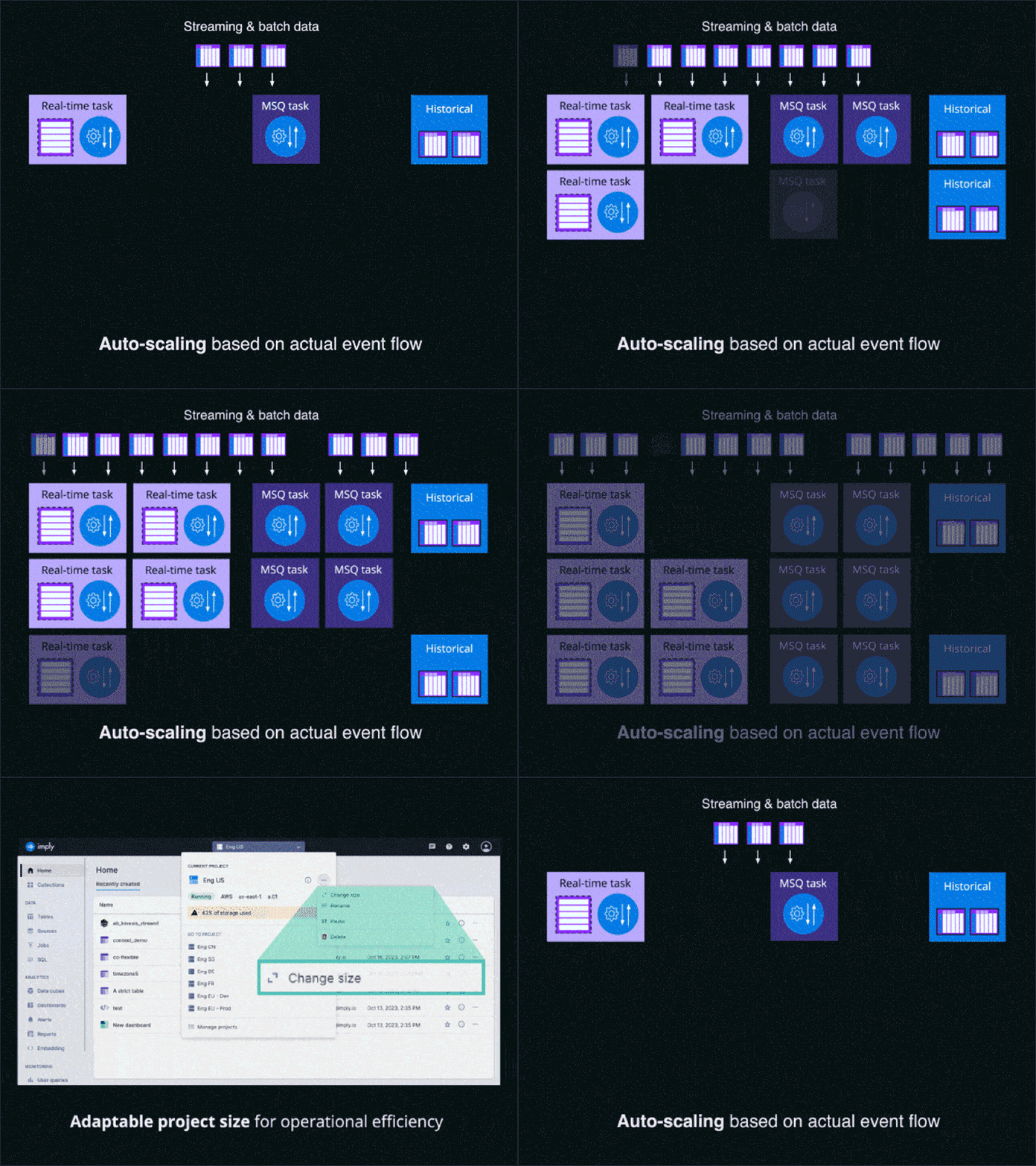
2. Built-In Visualization for Ad Hoc Analysis
Druid is a fantastic database, but out of the box, it doesn’t give you much in terms of exploring your raw data visually. That means extra work setting up third-party BI tools or custom-built dashboards.
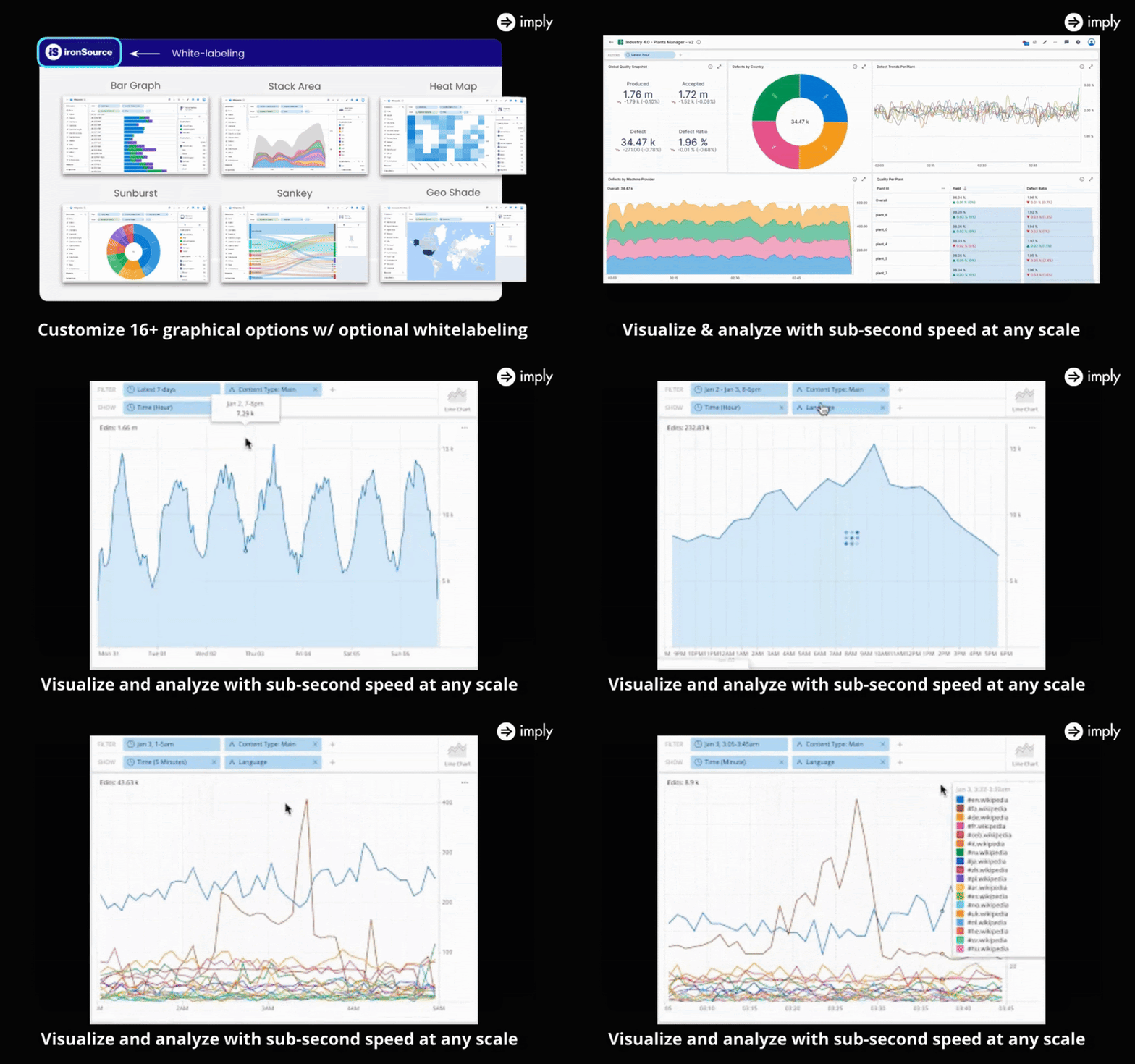
Polaris solves this challenge with native visualization capabilities (Pivot) that allow users to build analytics applications effortlessly for instant, intuitive data exploration:
- Point-and-Click Exploration: Polaris provides an intuitive UI for querying and visualizing data without the need to write complex SQL queries.
- Customizable Dashboards: Quickly create and modify interactive dashboards tailored to your business needs.
- White-Labeling for Customer-Facing Apps: Embed analytics directly into your products with branding control, eliminating the need for additional development.
This means faster insights and a smoother user experience—without requiring additional integrations or third-party BI software. For example, Ibotta used Polaris to enable 30x new users with self-serve analytics via Pivot, while reducing infrastructure costs by 25%.
3. Unique Capabilities for Advanced Analytics
Polaris isn’t just a managed Druid service—it also extends Druid with purpose-built features that provide more analytical power and operational simplicity. For example:
- Time Series Analysis: Polaris makes it easy to slice and splice time series data with simplified queries and powerful visualizations for trend detection, predictive maintenance and more. Although Apache Druid offers some basic time series queries, Polaris makes the process significantly easier with a 35% smaller column footprint and 25% faster speed than open-source implementations.
- Upserts (Dimension Tables): Polaris allows you to instantly upsert data when ingesting from Kafka for new or changed streaming data, leveraging Dimension Tables as a more efficient and scalable solution compared to traditional Kafka-based lookup tables with Apache Druid. For example, Metaimpact improved memory efficiency by 2X by upgrading to Polaris’ Dimension Tables.
- Seamless Upgrades: Polaris automatically applies zero-downtime updates, ensuring your platform is always up to date without service disruption.
These enhancements improve analytical capabilities, reduce operational complexity, and ensure maximum uptime.

4. Enterprise-Grade Security & Reliability
Security and reliability are critical for any tech stack tool, but even more so for a database that manages sensitive and business-critical data. While Druid provides some security features, self-managing it requires significant effort to maintain compliance and reliability. Polaris makes it easier to maximize security and resiliency with:
- Secure, Private Access: Unlike Druid, Polaris provides native capabilities to secure data access with login authentication (SSO), IP allowlists (to control project access), and private networking between customer VPCs and PAAS services to Polaris in the cloud. Additionally while Druid provides some RBAC capabilities, Polaris provides full RBAC with security at the row, column, and user level for multitenant use cases.
- Encryption & Compliance: Ensure compliance with verified certifications (ISO 27001, SOC 2, GDPR, HIPAA, Star Level 1), go beyond routine tracking with audit logs, and rest easy with more robust data encryption—Polaris adds to Druid’s TLS capabilities (in motion) with S3/EBS encryption + IPsec (at rest).
- Resilience & Fault Tolerance: Polaris provides high availability (HA), cluster self-healing, disaster recovery, more robust backups (at the cluster level), and AZ aware deployment for better resilience, zero downtime and minimal maintenance.
With guaranteed compliance and proactive monitoring, Polaris eliminates security and reliability risks with significantly lower operational overhead than self-managed Druid.

5. Committer-Led Support & Lower TCO
When something goes wrong with open-source Druid, who do you call? The Apache Druid community is great, but a professional services team will give you better answers faster.
One of the biggest advantages of Polaris is its 24/7 committer-led support, meaning you get direct access to the engineers who build Druid.
- Faster Onboarding & Optimization: Expert guidance ensures you get up and running quickly with optimal setup for blazing-fast query performance.
- Reduced Operational Overhead: No need for a dedicated team to manage infrastructure, upgrades, or tuning—Polaris handles it all, both automatically (as aforementioned) and through continuous expert guidance.
- Lower Total Cost of Ownership (TCO): By offloading infrastructure management, Polaris significantly reduces both operational costs and cloud expenses compared to self-hosted Druid. Many of our customers have found that the cost of Imply pays for itself, reducing TCO by 50%+ through time savings and reduced data storage.
With Polaris, you don’t just get a managed service—you get a team of experts ensuring your analytics run smoothly, so you can focus on extracting more value for your data instead of spending time and money on scaling, troubleshooting, and maintenance.
Ready to experience the future of real-time analytics?
Apache Druid remains a powerful real-time analytics engine, but managing it yourself comes with significant cost and effort. Imply Polaris removes these barriers, delivering a fully managed, scalable, and feature-rich solution that extends Druid’s capabilities while eliminating its operational challenges.
With auto-scaling, built-in visualization, unique analytics features, enterprise security, and expert support, Polaris is the clear choice for businesses looking to maximize performance, minimize costs, and accelerate time to insights.
To get started with Imply Polaris, you can request a demo or start a free trial (including $500 in free credits). If you’re still considering whether a test is worthwhile, you may want to check out this Druid vs. Polaris comparison page, Polaris overview, or Polaris demo video in the meantime.
Related articles
More from Imply on the same topic.

Search your Splunk DDSS archive without restoring it
Security teams often keep logs long after they have aged out of their SIEM platform’s searchable window. The data is there for investigations or audits, but accessing the data for insights can be complicated.

Claude makes dashboards now, Lumi is ready for them
This week Anthropic launched Claude Dashboards in beta. You connect a data source, ask a question in plain language, and Claude writes the queries and builds the dashboard.

Lumi Lounge Recap: 3 Takeaways from Splunk .conf26
The Imply Lumi Lounge sat directly across the street from Splunk .conf26 and reached venue capacity on both days. Digital signs around the Colorado Convention Center pointed attendees our way with a simple message: “Federated search, done right. Full SPL. Less spend.”

Agents don’t query like your detections do
A security team of four has run a major SIEM since February. Nobody on the team writes SPL. Nobody opens the console or looks at the dashboards. Every question goes through an AI agent, which writes the query, runs it, reads the result, and answers in plain language.

Why You Shouldn’t Have to Delete Your VPC Flow Logs
When a security incident happens, investigators almost always start with the same questions: Which systems communicated? Where did the traffic originate? What changed before the incident? Was data exfiltrated? AWS VPC Flow Logs are often the fastest way to answer those questions.

Splunk Smartstore vs Lumi Loglake: Two Very Different Ways to Search Logs in Object Storage
One copies data back before it can be searched. The other queries it where it lives. Lumi Loglake lets Splunk teams query logs directly in object storage, including AWS S3, Delta Lake, Apache Iceberg, using standard SPL.
Supercharging Schema-On-Read: Logs in Object Storage Don’t Need a Data Catalog
Machine data architectures are rapidly changing. As telemetry volumes continue to grow and as costs rise, organizations are increasingly moving logs and other machine data into object stores such as AWS S3.

Imply Lumi Loglake vs Splunk Federated Search for S3
Teams are increasingly moving log data into AWS S3 to reduce costs and extend retention. Both Lumi Loglake and Splunk Federated Search to S3 help you query data in AWS S3 to lower costs, however the two technologies have several notable differences.

A First Look at Lumi Loglake: Query Logs Where They Live
TL;DR: Imply Lumi Loglake is a lakehouse (separated compute/storage) architecture for unstructured logs that reduces costs from 40% up to orders of magnitude on your hardware/AWS/Azure bill used to run your SIEM/observability products.

Imply Lumi Major Release Preview: Continuing the Journey Towards Decoupled Observability/SIEM
We are getting ready to introduce the next major expansion of Imply Lumi and the observability warehouse. When we introduced the industry’s first observability warehouse, the goal was clear: decouple the observability stack by separating storage, compute, and access.

Query Lumi from Grafana: Now in Private Preview
Observability has a silo problem. Today, we’re removing another one. Imply Lumi’s Grafana Loki integration is now in Private Preview.
