
The Most-Read Imply Blogs of 2025 (and what they signal for 2026)


Before we take on 2026, let’s rewind.
2025 was the year observability teams stopped asking, “How do we reduce data?” and started asking the real question: “How do we build an architecture that can keep up?”
Global scale. Exploding telemetry. AI-driven workflows that want more history not less.
That’s why our biggest story this year was introducing Imply Lumi and putting a name to the foundation modern stacks have been missing: the Observability Warehouse—a drop-in data layer designed to help teams keep more data, search faster, and spend less, without ripping and replacing the tools they already use.
Here are five Imply posts that defined our 2025 story and point to what’s next.
1) Introducing Imply Lumi: The Industry’s First Observability Warehouse
When costs force you to drop data, the architecture, not the team is the bottleneck.
This post lays out why a shared data foundation under your existing tools matters—and what Imply Lumi unlocks: longer hot retention, faster search, and a platform-ready layer for AI/ML workflows.
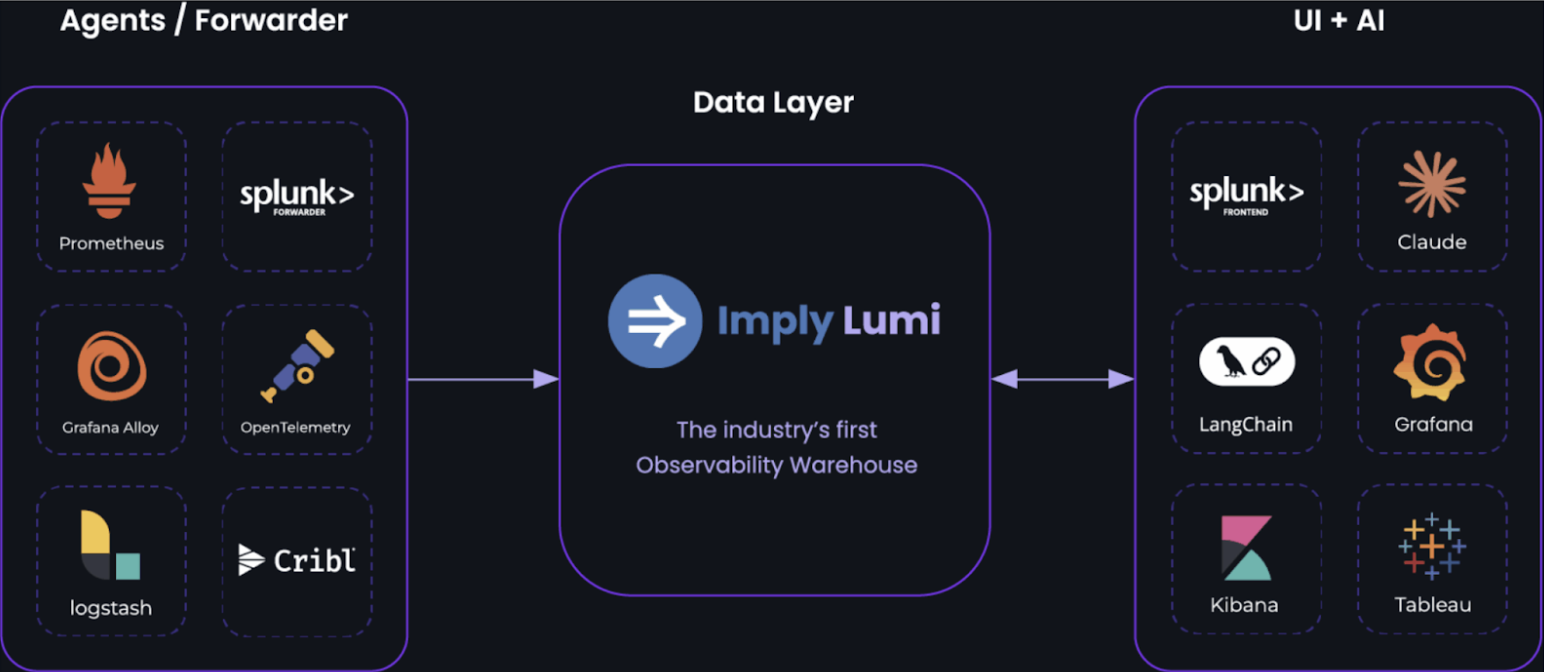
Read more → Introducing Imply Lumi
2) The Next Evolution in Observability: How architecture is following in BI’s footsteps
Observability is decoupling just like BI did because monoliths can’t keep up with modern scale.

This blog post connects the dots to BI’s shift toward decoupling—and argues observability needs the same missing piece: a scalable data layer (the Observability Warehouse).
Read more → The next evolution in observability
3) The State of Log Management 2025
Hot retention is shrinking—right when AI makes long, usable history non‑negotiable.
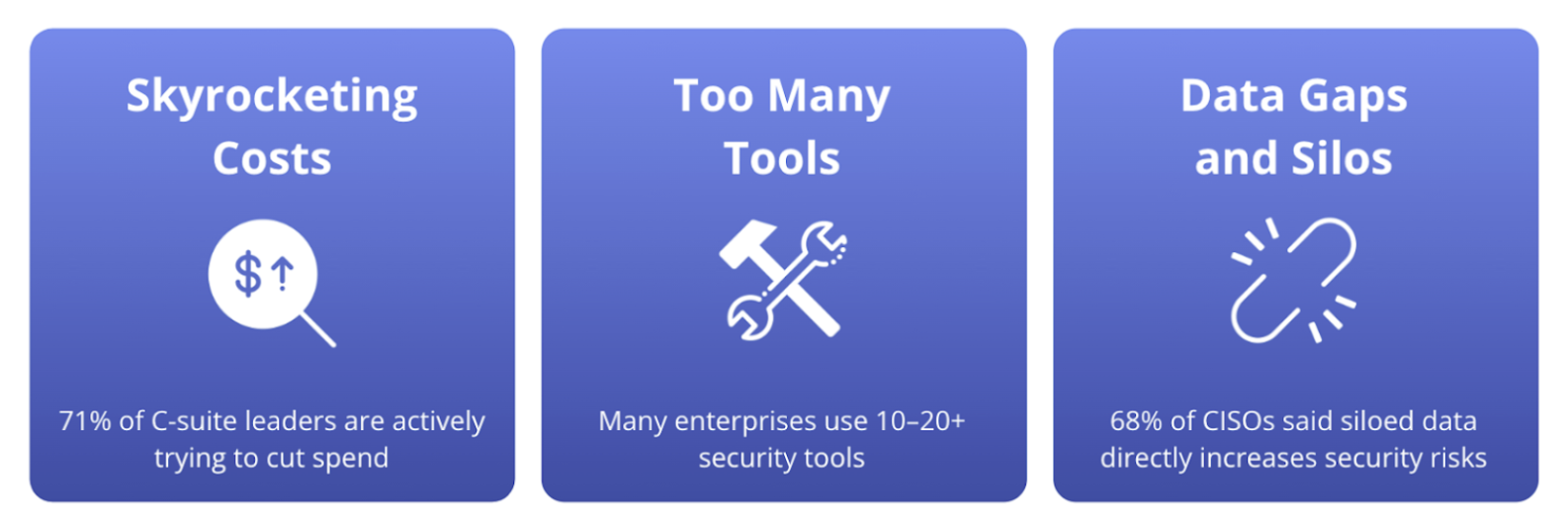
This snapshot (surveying 132 observability and platform admins) reports how teams are managing log growth and costs—often by shortening hot retention and filtering or dropping data—and why longer, more usable history is becoming more important as AI/ML use cases expand.
Read more → The State of Log Management 2025
4) From Cribl Stream to Imply Lumi in minutes
No big-bang migration required—add a scalable data layer in minutes and expand from there.
This blog covers a pattern teams want more of: control at the pipeline (Cribl Stream) plus power at the data layer (Imply Lumi), with fast onboarding paths (HEC or S3) and a rollout that fits real-world change management.
Read more → From Cribl Stream to Imply Lumi in minutes
5) How to Efficiently Scale Splunk with Imply Lumi
Keep SPL and your dashboards move the heavy data to a lower-cost layer and search it fast.

This blueprint shows how Imply Lumi can sit beneath Splunk and be queried directly in Splunk via Federated Search so teams can retain more, bring back data they’ve been forced to drop, and escape the classic cost/retention trade-offs without changing how they work.
Read more → How to Efficiently Scale Splunk with Imply Lumi
What we’re taking into 2026
The through-line: keep your tools—modernize the data layer—so retention, performance, and cost scale together.
- Decoupling is emerging as the default path we’re seeing (like BI) because it’s the only sustainable way to scale.
- Full-fidelity retention is back in focus, especially as AI/ML becomes standard.
- Integrations win adoption: start where customers already work (Splunk/Cribl/Grafana/OpenTelemetry), then scale out—so they can better prepare their data for the age of AI.
2025 set the foundation. 2026 is where we build on it—more integrations, more reference architectures, and more ways to keep observability fast, flexible, and affordable.
If 2026 is your year to stop trading visibility for cost, reach out. Bring your current stack, and we’ll map what an Observability Warehouse like Imply Lumi looks like in your environment.
Still not sure what Imply Lumi is? Join us Jan 7th, 2026 to learn how to manage Splunk spend at scale—and get a live look at Lumi. Happy New Year!
Related articles
More from Imply on the same topic.

Search your Splunk DDSS archive without restoring it
Security teams often keep logs long after they have aged out of their SIEM platform’s searchable window. The data is there for investigations or audits, but accessing the data for insights can be complicated.

Claude makes dashboards now, Lumi is ready for them
This week Anthropic launched Claude Dashboards in beta. You connect a data source, ask a question in plain language, and Claude writes the queries and builds the dashboard.

Lumi Lounge Recap: 3 Takeaways from Splunk .conf26
The Imply Lumi Lounge sat directly across the street from Splunk .conf26 and reached venue capacity on both days. Digital signs around the Colorado Convention Center pointed attendees our way with a simple message: “Federated search, done right. Full SPL. Less spend.”

Agents don’t query like your detections do
A security team of four has run a major SIEM since February. Nobody on the team writes SPL. Nobody opens the console or looks at the dashboards. Every question goes through an AI agent, which writes the query, runs it, reads the result, and answers in plain language.

Why You Shouldn’t Have to Delete Your VPC Flow Logs
When a security incident happens, investigators almost always start with the same questions: Which systems communicated? Where did the traffic originate? What changed before the incident? Was data exfiltrated? AWS VPC Flow Logs are often the fastest way to answer those questions.

Splunk Smartstore vs Lumi Loglake: Two Very Different Ways to Search Logs in Object Storage
One copies data back before it can be searched. The other queries it where it lives. Lumi Loglake lets Splunk teams query logs directly in object storage, including AWS S3, Delta Lake, Apache Iceberg, using standard SPL.
Supercharging Schema-On-Read: Logs in Object Storage Don’t Need a Data Catalog
Machine data architectures are rapidly changing. As telemetry volumes continue to grow and as costs rise, organizations are increasingly moving logs and other machine data into object stores such as AWS S3.

Imply Lumi Loglake vs Splunk Federated Search for S3
Teams are increasingly moving log data into AWS S3 to reduce costs and extend retention. Both Lumi Loglake and Splunk Federated Search to S3 help you query data in AWS S3 to lower costs, however the two technologies have several notable differences.

A First Look at Lumi Loglake: Query Logs Where They Live
TL;DR: Imply Lumi Loglake is a lakehouse (separated compute/storage) architecture for unstructured logs that reduces costs from 40% up to orders of magnitude on your hardware/AWS/Azure bill used to run your SIEM/observability products.

Imply Lumi Major Release Preview: Continuing the Journey Towards Decoupled Observability/SIEM
We are getting ready to introduce the next major expansion of Imply Lumi and the observability warehouse. When we introduced the industry’s first observability warehouse, the goal was clear: decouple the observability stack by separating storage, compute, and access.

Query Lumi from Grafana: Now in Private Preview
Observability has a silo problem. Today, we’re removing another one. Imply Lumi’s Grafana Loki integration is now in Private Preview.
